48 Hours

Ever have a  trip to the emergency room? Here is my experience from this week….

At 8:30 PM on Saturday, January 29, Embry made the call to Kaiser Permanente, our health care provider, to determine if my condition was serious enough to visit an emergency room. I had started feeling nauseous that afternoon and by late afternoon had a bad stomachache and was throwing up black liquid with small particles. Must have been something I had eaten I figured and had neglected to even mention it to her, thinking that a good night’s sleep should clear it all up. But then that evening just as I had decided to call it a day, I hesitated, “Come and take a look at this,” I called out; and within a minute or two after examining the vile evidence, Embry was on it. She consulted the internet first, looking for “black vomit.” It turns out that there is a lot of stuff on the internet about black vomit and none of it good. She reported that the internet recommendation was to go immediately to the emergency room.

“It’s even worse than you think,” she said. “It says one cause could be disintegration of the liver. You may have to say goodbye to your predinner cocktail.”

This is serious, I thought.

I listened to her end of the conversation with the Kaiser people. It consisted of one serious “yes” after another. We have been members of Kaiser for over ten years and have had pretty good experience; and since they are an HMO, the health care delivery cost is on them. That is why you must get their approval first before going to an emergency room and why they tell you which one to go to. Not a perfect situation but understandable, given that it is on their nickel. If Kaiser says you need a procedure, you know you need it.

Embry reported back. “Emergency room. Immediately. Let’s go!”

We raced down to the car; and given my condition, Embry, who never drives at night because of her eyesight, jumped in the driver’s seat. When I asked her which emergency room we were going to, the answer was the Medstar Washington Hospital Center.

“Great,” I responded sarcastically. Why couldn’t it have been Sibley? That hospital is the closest to us, located in a fancy DC neighborhood, and recently renovated to resemble a palace with original art on the walls, plenty of luxurious lounge areas, private rooms, and a country club atmosphere. I had even heard rumors of classical music in the hallways, English high teas at four every afternoon, and meals prepared by a five-star chef.

“Kaiser has a deal with the Washington Hospital Center,” she replied.

We had both been to the emergency room before at the Washington Hospital Center. We had taken Embry’s brother, Mike, there  a few years ago due to a urinary track infection. That day the situation was chaotic with ambulances backed up waiting to deposit people with drug overdoses, gun or knife wounds, along with routine car accidents, broken bones, strokes and heart attacks. It is Washington’s largest hospital with almost 1,000 beds and one of the few remaining hospitals that still serve the District’s most troubled neighborhoods. There were patients on stretchers hooked up with IVs, occupying almost every available inch surrounding work stations with computers and all kinds of medical devices, some making whirring sounds. Nurses and doctors were scampering everywhere as best as they could through the crowded space along with a number of DC police officers keeping a watchful eye on patients, some of whom were in handcuffs.  I concluded at the time that it could be the only hospital in DC where in the emergency room, cops outnumbered doctors. This was a far cry from Sibley where I visioned you would be greeted in the emergency room by someone wearing a doorman’s outfit, offering you a beverage.

But that was where we were headed, and it was a Saturday night, the busiest of the week. What was I in for?

The Washington Hospital Campus is enormous and contains not only that hospital but Children’s Hospital, the National Rehab Hospital and the VA Hospital. Signage is poor, and it took a couple of mistakes to finally get on the road leading to the ER. Since there was no place to park nearby, Embry dropped me off and then went in search of parking. The idea was that I would wait in line, get seen by a doctor, get a prescription for some pills, and would be back in the car and home in a couple of hours. Embry would wait for me in the waiting room, and we would be done with it.

My first surprise was that there did not seem to be anyone waiting in the handful of empty chairs in front of the door to the ER. That was good sign though I did remember from our visit before that most of the patients arrived by ambulance. Within a minute or two the door opened, and I was invited in by two technicians, who gave me a covid test, took blood samples, and asked me a bunch of medical questions like why was I there and what was wrong with me.  When I told them my disease was “black vomit,” the lady taking notes shrugged and gave me a funny look. They took down all the information, gave me a blue “vomit bag,” and ushered me into another waiting room, a dark and somewhat dismal place, with about 10 chairs and only four other masked patients waiting—one athletic man in his twenties with a blanket mostly over his head, his mask pulled down to his chin, and sleeping with a blue vomit bag beside him, an old guy in a wheelchair, and two older women, one asleep and the other on her cell phone. I figured the wait would be short with only four people ahead of me, and texted Embry that I should be out soon. I received no reply since she was still trying to find a parking spot in a mostly disserted area since for some reason parking had been restricted around the ER.

I patiently waited for a while, then checked my watch to discover that I had been there almost an hour, and only one person had been called. At this rate, it would be well after midnight before my name was called. I texted Embry in the waiting room to tell her to go home, only to receive her response that she was already home since they kicked her out of the waiting room due to covid  restrictions. I texted her back that I would get an Uber home. It was not that long after that that my name was called, about 11:30, though the three others in the waiting room before me were still there.

When I entered the main emergency room, the chaos and bustling were the same as they had been years before though not as many cops and not quite as crowded. I did not get a chance to take it all in because I was told to follow a young man in a blue uniform, who escorted me rapidly around people on stretchers. The small room where he deposited me had been designed for one patient but had been subdivided into two spots, each surrounded by a curtain. The tiny spot I was assigned to was next to a wall with no windows and barely large enough for just one stretcher. I sat down on the stretcher waiting for someone to show up.

For about 15 minutes nothing happened, and then came the onslaught. I do not know how many doctors and RNs there were in the ER that night, but a whole bunch descended upon me in sequence, though separately. I counted at least five whose badge said “Physician” and probably even more that said “RN,” and they all asked me the same questions: “What is your name? How old are you? Why are you here? What are your symptoms?”

“Hey, don’t you guys talk to each other? I have told the doctors before you all that,” I commented to the third or fourth doctor to interview me. When I told them I was suffering from “black vomiting,” I got some blank stares.

All this took about 20 minutes, and they were gone. I was left alone, staring at the wall. Then after about another 15 minutes, an RN appeared with a hospital gown in her hand and told me to take off my clothes and put on the gown and wait for further instructions. Another RN appeared shortly after that and took more blood samples, then another who hooked up an IV system. Then two more who inserted a suction tube into my nose, down my throat and into my stomach, assuring me that it would not hurt but I could expect “minor discomfort,” an assertion that I was soon to learn was highly optimistic. By midnight I was hooked up, plugged in, and ready to be cured though all this seemed to happen so fast I had difficulty figuring out what was going on or where it was all headed. By that time it had become increasingly evident that I would not be going home this evening.

While my initial encounter may sound impersonal and abrupt, it was not. The doctors and nurses were friendly, seemed to take me seriously and to see me as a person, not as victim. I had had polio as a child and remember the feeling of being treated like an object or a “case” and not as a human being. I knew what that felt like. This was different.

One doctor returned a few minutes after everyone had left and admitted they were a bit stumped and that I needed a CT scan. After that a guy came in and started to push me on my stretcher, which, it turned out, was too wide to go through the door. After he took down the side rails and pushed hard, it squeezed through; and we were off to the scan, then returned, squeezing back through the door to my tiny spot. I recall commenting as we were trying to squeeze through the door opening, “Who designed this hospital anyway?”

A voice from somewhere answered, “An idiot.”

By this time, it was past 1:00 AM, and I was completely exhausted but unable to go to sleep due to the “mild discomfort” of the suction tube, which made it unable to swallow without horrific pain. The suction tube seemed to be doing what it was supposed to, however, as I watched dark liquid flow up through it into a container.

Then arrived the Guardian Angel dressed in her hospital blues and disguised as an RN.

“Feeling any pain, Mr. Howell?”

I nodded. While I did not have any pain in my stomach, in my throat where the tube was rubbing, the pain was killing me.

“How much pain, from one to ten?”

“Seven.”

“Ok, I will sweeten the IV with a little morphine.”

“Really?”

“Yes, really.” And in a matter of a very few minutes, I was in la-la land, sleeping peacefully in a golden palace. This was the first of my three “level seven” answers to the pain question over the next 24 hours. It was all I could do to keep from pleading for a prescription for a year.

My Nirvana was interrupted, however, around 3:00 AM by what appeared in my hazy mind to be several physicians, one of whom, a woman in her 40s, was enthusiastically saying, “Mr. Howell, Mr. Howell. We know what is wrong with you! We have figured it out.”

There was a pause, then she said, “You’ve got ‘Blocked Bowel Obstruction!’ “

“Oh,” I said, then paused, letting it sink in.

“Wow, sounds like terrific news! You can fix that, right?”

“Yes, we can fix that.”

Before collapsing back into my dreams, I heard a soft voice from one of the other physicians, a man, “Dodged the bullet on this one, Mr. Howell.” As I dozed off again, for the first time I felt a kind of peace. I knew I was in good hands, and that they were going to get me through this ordeal.

Which they did.

A doctor, a bald, older guy, wearing a long white coat, who appeared to be more or less coordinating the myriad activities affecting me, woke me up at seven and said that matters were under control. The suction tube was working and draining out the vile black stuff out of my stomach, and the infection was diminishing. If that continued, as he thought it would, I would not have to have an operation and could leave the hospital in a day or two. Otherwise, it would probably be a week.  I would be transferred to the main hospital as soon as a bed was available. “Could be awhile, shortage of beds due to covid, you know.”

It took almost 12 hours. Were it not for the morphine sweeteners administered by the Guardian Angel, I do not know how I could have gotten through this period. From the time that my situation was under control, the army of doctors and RNs who had rushed to my aid were attacking the demons affecting scores of other desperate people, many far worse off than me.

I was now in solitary confinement in limited space, with poor lighting, no windows, and little contact with the outside world except for occasional visits by my Guardian angel and another RN sticking her head inside my tent to verify I was still alive. There was a small TV next to the stretcher, but it did not work. My main activity was sleeping and occasionally checking my iPhone for messages, news, the football playoff scores, and updating Embry and our kids. But at that point I was too exhausted to do much besides try to sleep.

At 8:52 PM, however, a “transport” miraculously arrived to take me to the main hospital, pushing hard and fast along the dismal gray corridors of the hospital, as if we were off to a race, and passing by others pushing stretchers in the other direction, just as fast and as hard, carrying patients, or dead bodies under sheets.

At 9:00 PM I arrived at building 3C20A, almost exactly 24 hours from the time I entered the ER.

The second 24 hours was now underway at 9:01 PM on Sunday, January 30.

The highlight of my arrival in this crowded and busy “Kaiser ward” in the hospital was the appearance of yet another Guardian Angel also masquerading as an RN, who in hooking me up to the IV and all the other connections asked me “straightaway,” as the Brits say, what pain are you experiencing, to which I yelled “SEVEN!” That occurred around 9:30  PM and paved the way for a peaceful and restful evening, alas, the last help I would receive from pain management.

The Kaiser ward was buzzing with activity with RNs and LPNs, all women, and various assistants helping with food service and other items. While I knew I would not likely get a private room, I had hoped for a window position, but that was not in the cards. I was wheeled into a very small, double unit, which did not give me much more room than I had in the ER. There was a wall TV, however, which supposedly would work and a small bathroom (toilet only, no wash basin), and that was  about it, no space even for a single chair. Before the visiting prohibitions required by covid, I wondered where a visitor would even stand. The bed next to me on the other side of a curtain also had a TV, and the question immediately came to mind—who was this person. There was a Western movie showing on his TV, which I could barely see, because the curtain separated us, and I had no idea as to who this unseen person might be, so close I could reach out and touch him but yet so far. That would have to wait until the next morning. I collapsed dreaming of Nirvana; and even though I was waked up twice by nurses checking vital signs, I got a much needed sleep.

I woke up around 6:00 AM feeling pretty good and noticed on the wall a white board with pertinent patient information. Besides my name all it said was, “no food or liquids by mouth!” followed by another warning, “bed alarm activated.” They had me. If I even got up from the bed to stretch, or to go to the bathroom, an alarm would go off. Good heavens, I thought, I am in prison.

Then around 7:00 AM, a youngish, masked, female doctor appeared, who seemed to be on top of everything. She said she had reviewed my records and concluded that I was out of the danger zone, which had turned out to be  very serious, but that the doctors still had not figured out what triggered the blockage; and until they got on top of that, I would remain in the hospital as long as it took to understand the causes, but probably no more than a week. Since there were still vestiges of pain medication in my system, at the time I did not panic. That happened about an hour later: Another week in this hospital? I would go crazy!

I took a deep breath and told myself, one day at a time, one day at a time.

I was still suffering from the pain of swallowing with the tube going down my throat, a situation which changed dramatically when another doctor entered my room around 10:00 AM and announced that the tube could come out. Eureka! About an hour later an RN appeared, and out it came. Free at last, free at last! That is when for the first time I felt like calling or emailing friends and letting them know where I was and that I was on the mend.  I immediately called out to my mysterious roommate behind the curtain, “Hey, roommate, I am Joe. Glad to meet you. How are you?”

No response.

I started to wonder again how I could manage to get through the rest of the day. I thought of the TV and looked around for a remote, unable to find one.  Then I tried the nurse call button and waited for an hour. No one came. Ok, I said to myself, I will get their attention. I will stand up and get off the bed. Immediately an alarm blasted, and one nurse and two attendants charged in to grab me and tackle me back to my bed. I immediately sat back down before they could reach me, but it had worked. I had gotten their attention. They all three laughed and apologized. In fact, it turned out there was no remote for the TV and no nursing call system near my bed. What I thought was a nurse call button was for the telephone. They fixed that problem, and the rest of the afternoon I amused myself by watching television, first looking at MSNBC and CNN and then switching to the same Western movie channel that my mysterious roommate was watching—a movie with John Wayne and Kris Kristopherson.

The thing that continued to intrigue me was who was this mysterious roommate. I had some clues. I heard him talk to his wife and son and he seemed to have a gentle voice and to be a kind and gentle person. I guessed he was pretty old, but was he White or Black and why was he there? There seemed to be something I could barely read on his white board having to do with a minor stroke. The breakthrough came when someone from rehab came to interview him to see if he could benefit from that service. I could overhear that he was born in 1943, almost my age, that he used a walker, and that his job before he retired was a recreational therapist. I guessed African American but that did not seem to jibe with his obsession for Western movies. After the rehab person left, I peered around the curtain, being careful not to get out of the bed and sound the alarm, and said “Hi, great movies you are watching.” He smiled and said, “Glad to meet you, brother.” I was right. African American. I could not help wondering how many people go for days or longer in these hospital, double occupancy rooms with curtains separating them without ever seeing, talking to, or knowing anything about their mysterious roommate.

As the day wore on, there was still the open question of when I would get out of here. One doctor had said yesterday that I would probably be able to leave today. He appeared again just after lunchtime and confirmed that. But that did not jibe with what the other doctor had said earlier in the morning, which could mean as much as a week here. Who was right?

It was after six in the evening when I got word I could actually have a “soft meal,” which was delivered at 6:30 and possibly the worst meal I have ever had. Even after missing a whole day of meals, I could only eat a few bites. I called and told Embry to go ahead with a supper that had been planned  with two friends at the KW, our apartment house,  but be ready to pick me up just in case. At 7:30 PM a new doctor who volunteered she was “just a Resident,” appeared to inform me that I would be discharged tomorrow morning. When I protested, she said it was definite because they had to wait to see how I handle food before they could discharge me.  I called Embry to let her know that she did not have to pick me up after all, but before I could hang up, the “Resident Doctor” reappeared and confirmed—probably blushing under her mask– that the paperwork was ready and I could leave immediately after signing.

As I started to put on my clothes and get my stuff, a kind voice from the other side of the curtain said, “Good luck, brother, good knowing you.”

“Good luck to you too, brother.”

A “transport” appeared at 7:45 PM with a wheelchair and rushed me down to the deserted, main lobby through the long, dark corridors. Since Embry would not arrive much before 8:30, I suggested he just let me walk out by myself. Impossible, he replied, against all hospital regs. He then remarked that he was supposed to get off at 8:00, said he was pissed off that I was forcing him to work overtime, and then just disappeared. I waited alone in the lobby in the wheelchair for another 30 minutes, then against all hospital regulations, got up and walked out on my own as Embry arrived, almost to the minute of my ER arrival 48 hours before.

My 48-hour hospital ordeal was over.

I was the lucky one. The ER doc’s figured out what was wrong and fixed it. I was a short-timer. I was treated with kindness and respect. But as I patiently waited for Embry in the deserted, main lobby to the Washington Hospital Center, I could not help thinking about all the others—the desperate people in the emergency room, some stumbling into the room with gunshot and knife wounds, some moaning, and the hundreds of people in the hospital with covid cases still festering, some who will never make it out alive. I thought about  my kind roommate with a walker and a recent stroke victim, all the others suffering alone, with no visitors, no family or friends to comfort them and help get them through their ordeal or make their death less frightening.

And then what about the people who deliver the care day in and day out, the front-liners? I have never seen people work any harder or more focused. You can start with the doctors and the RNs, but at every level, people come to work every day helping people, many in desperate need, and in covid-time risking their own life—the LPNs, CNA’s, janitors, attendants, med techs, rehab specialists, food service people, transports and more. And in this hospital the people were overwhelmingly people of color. The list is long. How do they do it? How do they keep doing it day after day, not making all that much money, and trying to deal with their own health issues, childcare, school, aging parents, and paying bills?  How to they have the strength to comfort dying people who are complete strangers? How do they just keep doing it? But they do. They have to. It is their job. No one else is around.

They are the American heroes of our time. They are saints. For them we should be profoundly grateful.


Visit me on Substack!
Subscribe to my Substack!

Partners For Life (and Death)

An article appeared this week in the Washington Post covering two large demonstrations last weekend on the Mall. The first was the “March for Life” and the second, which took place the following day, was the anti vaccine march where Robert F Kennedy Jr. referred to the government’s role in promoting vaccines, masks and covid tests as being worse than anything that happened in Nazi Germany. The article also described demonstrators from one demonstration embracing and hugging demonstrators from the other  (all maskless of course). This inspired the Fauxtoon below:

Visit me on Substack!
Subscribe to my Substack!

Republicans Respond to Bidens’s Challenge To Say What They Are For

What do you mean, we Republicans are not FOR anything? This is a lie, a damn, bald-faced lie and you know it. WE are the ones that are FOR what the American people want, not you do-nothing Democrat failures.

So you wanna know  what we are for? THIS is what we are for:

We are for getting rid of Covid mask mandates.

We are for getting rid of Covid vaccine mandates. 

We are for gun rights for everyone, anytime, all the time, no exceptions.

We are for making teaching CRT illegal at all schools, colleges, and universities.

We are for making abortion illegal everywhere in the United States.

We are for sending illegal immigrants back to where they came from.

We are for keeping immigrants out of the country.

We are for the oil and gas industries.

We are for stopping the efforts to slow global warming, which is not even happening anyway.

We are for  efforts to stomp out “political correctness” wherever it raises its ugly head.

We are for the brave patriots who tried to rescue our democracy on January 6 by peacefully occupying the Capitol.

We are for keeping the filibuster as long as Republicans are not in the majority in the Senate.

We are for restricting voting in precincts leaning Democratic and where there are a lot of minority voters.

We are for requiring state legislatures in Republican-controlled, battleground states to exercise their Constitutional right to appoint the electors of their choice.

We are for tax cuts for the wealthy.

And Most of all, we are for Donald Trump, our Supreme Leader, who is infallible, and who will lead our country into a new era of Authoritarianism and greatness.

So don’t give me that BS about how we are not FOR anything.


Visit me on Substack!
Subscribe to my Substack!

Welcome, Embry Howell Bivigou Pangou!

Against all odds, despite international Covid restrictions, global flight cancellations, and general chaos across the planet, this week a young, Gabonese woman by the name of Embry Howell  Bivigou Pangou arrived in Portland, Maine to live with our daughter and her family and study at the University of Southern Maine. How was this possible? It all comes down to two women named Embry, and, perhaps, nothing short of a miracle.

 If you are wondering how a Gabonese woman could have as a first name “Embry Howell,” it began with the Peace Corps.

Before our son-in-law, Peter Ellis, married our daughter, Jessica, about 20 years ago, he spent two years as a Peace Corps volunteer in Gabon, a small, West African country and former French colony with a population of fewer than one million people in 2000. Jessica joined him a year later as a Peace Corps stowaway/wannabe.  Jessica’s mother, Embry, a victim of incurable wanderlust, could not resist the temptation to visit them in this remote village, with mud-brick huts with tin or thatched roofs, dirt floors, and a day’s hike through the rain forest to the nearest village. Peter was an agricultural specialist. At least that was his title. Climbing palm trees to assist in the production of palm wine also seemed to be a major activity. Jessica found volunteer work helping with grant writing for a local community organization

When Embry arrived for a three-week visit toward the end of their Peace Corps stay, this community welcomed her with open arms. She immediately became “Mama Embry.” The homes of the villagers were near an abandoned, evangelical Christian compound built by Methodist missionaries decades before. The villagers were convinced Mama Embry had been sent to them by God. Embry silently protested, though in retrospect, perhaps they were right. She bonded with them, especially Simon Pangou, who had several children from teenagers to toddlers.  About a year after Peter and Jessica returned home from Gabon, they received word that the next child of the Pangou family was proudly named “Embry Howell Bivigou Pangou,” born approximately nine months after Mama Embry departed. Embry was delighted to have her first namesake; but as the years passed, she did not give it a whole lot of additional thought.

Peter went on to earn a Master’s in Environmental Studies and eventually became a top carbon scientist at the Nature Conservancy. This job took him occasionally to Gabon where he reconnected with the villagers and with the Pangou family. Embry Howell Bivigou Pangou—now referred to by us as “Little Embry” –caught Peter’s attention even as a very young child; and a few years ago, upon returning to the U.S. from Gabon, he announced to his family and to Embry that we had to figure out some way to get her over here. He described her as incredibly smart, with a personality that would win over anyone, and the voice of an angel. She had finished high school in Libreville, the capital of Gabon, where the family had moved so the children would have better educational opportunities. She really wanted to go to college and come to the United States.

It is only a minor exaggeration to say that within minutes Embry was on it. And it was not too long before a plan was in place, though implementing the plan took years.

Step one: Find a good college here in the U.S., where Little Embry could study, preferably with a scholarship. The challenge was that Gabon is French speaking; and though Little Embry’s English was surprisingly good,  Embry feared it was not good enough to pass the tests required to get into a U.S. college. Solution: Try to find a college that specializes in helping foreign students improve their English and their educational shortcomings to a point where they can qualify for college. Embry not only found such a college, The University of Southern Maine, it just happened to be a short bike ride from Peter and Jessica’s house in Portland. We got Little Embry all the application material, which she filled out and sent in along with an upbeat video where she sat in front of a banner that read “The University of Southern Maine” and, beaming, exclaimed in impressive English that the university was the perfect fit for her and she for it. I saw the video and was immediately captivated. To the surprise of no one who knew her, she was accepted.

Step Two: Get her over here. American visas for a Gabonese citizen are very hard to get. You must make a case that you are not leaving for good and will return to the country within a relatively short period. During the Trump years, in many poor countries in Africa, visas were not  available. This was the case in Gabon when Trump closed down the U.S. Embassy. It would take three years before Biden would reopen it and appoint an ambassador, when in 2020, obtaining a visa became possible again. Then in summer of 2020 when it became apparent that Covid was here to stay, everything shut down again, then opened in 2021 briefly during the fall, just before the Omicron variant appeared.

During the long delay, Embry persuaded the University of Southern Maine to keep the acceptance open for her African namesake, and they agreed to do this for what would become three years. As 2021 came to a close, however, they told her that this was the last shot. If Embry Howell Pangou was not able to make the spring 2022 term, the acceptance would be withdrawn.

Full court press time.

In order to get a U.S. visa, you have to answer a lot of questions and have a personal interview with embassy officials. It took several tries for the interview to happen, having mainly to do with getting the application in proper form, computer problems, and having embassy personnel show up. But toward the end of 2021, it looked like everything finally was falling into place. The embassy interview got scheduled, and Embry had the airline connections figured out and how Little Embry could  get a covid vaccine. Interviews at the Embassy finally started up again in early December, and Little Embry had her interview just before Christmas. It went well.

The race was on.

Hearing the report of a successful interview, Embry bought an airline ticket for Little Embry from Gabon to the U.S. with a connecting stop in Togo.  Just before Christmas Little Embry was able to book an appointment to have a J&J vaccine (the only one-shot vaccine available in Gabon that the U.S. will accept and given the short time frame, two shots would have taken to long) two weeks before the flight to the U.S., the minimum time required by U.S. law. She still had to receive the visa, and she had to have a test showing negative Covid results 24 hours before leaving. If either of these actions failed, she would not have made it to the U.S.—at least not in time to keep her place at the University of Southern Maine.

Little Embry also had to get to the airport in plenty of time. (She had never flown before.) She had to clear passport control. The plane had to take off close to on time since she had to make her tight connection with the flight going to Newark at a time when thousands of international flights were being cancelled every day.

Just when it looked like all the obstacles had been overcome, when Little Embry arrived at the airport, the Air Afrique representative told her she was not on the list and could not board the airplane. Fortunately, her mother, Mama Clara, was with her, and, as we were told later by Peter, “You don’t mess with Mama Clara.”  After some arguing, it was clear that there had been a clerical error on the “list” (written in pen on paper), because there was also another Pangou on the airplane. Another close call.

Only one hurdle left—making the connecting flight in Togo.

What were the odds that everything would happen as planned?   Embry was pacing the floor of our apartment, starting two days before Little Embry’s scheduled departure. She was checking email and voicemail messages constantly, breathing a sigh after learning another hurdle had been crossed.   Late at night on the second day of anxiety, a selfie appeared on Embry’s mobile phone showing Little Embry on the airplane to Newark, making a “V” sign with her fingers.

Little Embry had done it!

The flight arrived on time in Newark where our son, Andrew, met her and took her to his home in Maplewood NJ, for an overnight stay and then back to the airport to board a flight to Portland the next day where she was met by Peter.

Little Embry is now happily settled in the guest bedroom in the Ellis home, which will be her home for the next year. Classes start this week.

Was this a miracle?  Well, it is fair to say that none of this would or could have happened without “Mama Embry’s” perseverance. But there were others—Jessica’s husband, Peter, whose idea it was to bring Little Embry to the U.S. and who did a lot to keep the effort alive. Kudos to Andrew and his family, who greeted her at Newark airport, and hosted her in their home. Then there is our daughter, Jessica Ellis, whose home is often a haven for those seeking shelter and solace, along with two cats, five chickens, a Pit Bull, their two teenage children, and a visiting high school student from Mexico. They each played a role in this success. But Little Embry is the true hero of this story. She never lost hope or faith in the power of God to enact miracles.

And it does feel miraculous. So many things could have gone wrong. So many hurdles to jump. Who said we humans aren’t active agents in miracles anyway?

And now Little Embry, known to everyone except us, as just “Embry,” is on U.S. soil, ready to start a new adventure, which will surely change the course of her life. In so many ways, I think this is a typical immigrant story which shows the courage, strength, and determination that is required to overcome enormous obstacles.

So, I say, thanks for miracles. And, finally, I say special thanks for my wife, Embry, who, hangs on like a junkyard dog and does not let up until the job is done—as, I am told by Peter, “just like the Pangous.”

And for Embry Howell  Bivigou Pangou, the real work of establishing a new life in a new country has just begun.


Visit me on Substack!
Subscribe to my Substack!
What Would Jesus Do?

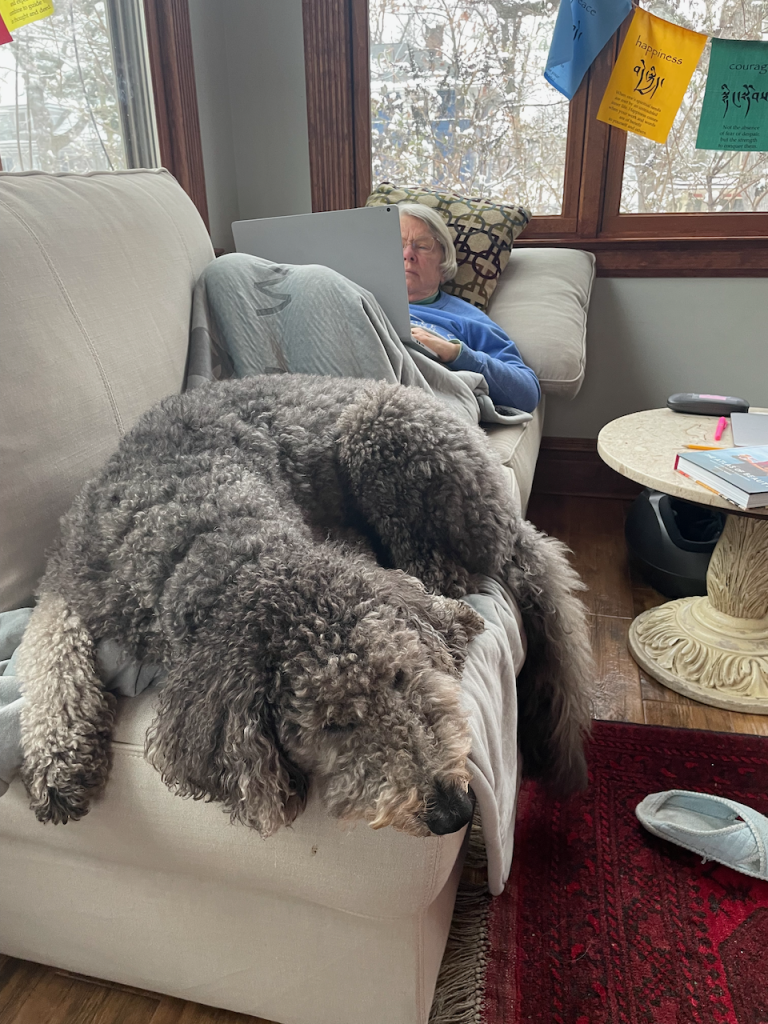
It takes about 10 minutes to walk from our apartment on Connecticut Ave past all the neighborhood retail stores near us. This afternoon the wind was howling at 25-30 miles per hour, ushering in a cold front that will bring temperatures down to the teens followed by what is now described as a major snow event on Sunday. The wind chill must have been in the low 30s.

I passed by eight panhandlers, squatting on the sidewalk, spread out among the various stores,—seven men and one woman, all shivering, all African Americans. Hands extended, holding  paper cups, they all looked up at me as I passed by, saying the same thing, “Could you help, got any change? Please, please, mister.”

I passed by every one of them and did not look them in the eye or reach for my wallet. To make matters even worse, I had just stopped by the liquor store and was carrying in a bag a bottle of scotch.

Panhandling is not unusual in Washington. When I used to walk to work downtown, I occasionally would count the number of people I would pass who were begging, which usually was in the double digits, occasionally in the twenties. Passing by and not making eye contact is nothing new for me, but for some reason, this time it got to me. Maybe it was the bitter cold or the fact that on this day there were so many in our neighborhood. Sometimes I have given them money, most of the time I haven’t.

As I passed the last panhandler, I had the image of me standing in front of a bearded Saint Peter at the Pearly Gate, asking me, “Ok, Mr. Howell, what did you do on that windy, cold day in Washington, when you passed eight desperate people pleading for a little change?”

So what are we bleeding hearts supposed to do anyway? How can we pass by a desperate stranger and turn a cold shoulder? But we do. I do it all the time. But to fork out money every time is crazy. That is all I would be doing, giving out money every day. Nobody does that.

“But, Saint Peter, you have got to understand,” I envisioned my reply. “There are so many of these people. Sure, I could afford a dollar here and a dollar there, but it all seems so hopeless. And besides I do all kind of volunteer work in affordable housing and supporting nonprofit organizations that help the poor. Embry and I have given a lot of money to all kinds of charities. I have tried in my own way to support structural change in our society to level the playing field. We are even church goers. Hey, I am a loyal Democrat, does that count? How much more is expected of me?”

“Just do what Jesus would have done,” he replied.

Doomed, I concluded.

Surely, Jesus would have helped every one of these poor people. But, I wondered, what would helping them mean? Just giving a quarter here and a dollar there is certainly not the answer. I could hear myself shouting at the Old Guy, “What is wrong with this world? Why is there so much poverty in a land where there is so much wealth? Why do we humans treat each other so badly? Why is there hate and greed? Why is there racism? Isn’t this the human condition? Isn’t this the world we live in? And whose fault is that? Who created this mess in the first place?”

“Enough from you, Mr. Howell. I told you once and I will say it again: Do what Jesus would have done.”

And so we humans stumble through life doing, in our view, the best we can, realizing that it is not enough, not nearly enough. But that does not mean we should stop trying. And who knows, when the Old Guy at the Pearly Gate looks at the ledger, maybe the pluses will outweigh the minuses, as we have tried feebly to make our way in this glorious but troubled world.


Visit me on Substack!
Subscribe to my Substack!
January 6: One Year Later

So how are you taking the anniversary of January 6? Are you comfortable that it is behind us and that we are now moving forward? Are you uneasy that lingering hate and unrest are still around and have not been addressed? Or are you scared out of your mind that January 6, 2021 was merely a warning shot across the bow and that what happens next could be even worse?

In my case, what I fear most are not more violent assaults by outraged mobs or domestic terrorists—though these could happen—but rather a slow eroding of the guardrails that have kept our democracy safe. Those guardrails appear to  be weakening. When over half of the Republicans believe that the election was stolen, when Tump’s support remains solid, when  few Democrat and Republican senators and congressmen are  on speaking terms, and when Trump-appointed judges and justices are capable of throwing monkey wrenches, there is less comfort that the center will hold.   Even more frightening is that Republicans have figured out the weak underbelly of our system, and are on it big time.

Here is how they plan to take back control of the country:

 Biden beat Trump by over seven million votes  in the 2020 election—a trouncing. But if just a few votes in key states had changed Trump’s way, he would have won. It was much closer and much scarier than you might have thought. According to a great op ed piece in the New York Times today (by Jedediah Britton-Purdy, Columbia Law School professor), if just 43,000 votes had switched from Biden to Trump in three critical battleground states, Trump would have had the Electoral College votes he needed to win.

Bullet dodged.

For now.

Republicans have figured this out and have a new strategy–forget the popular vote. Go for the battleground states and change the rules so Republicans will lock in the states that make a difference regardless of what the popular vote is. They are doing this by getting Republican-leaning, battleground states to change state laws which determine how votes are counted, placing the final responsibility for declaring a winner on people who have a dog in the fight. In other words, if these actions are successful in enough battleground states and are allowed to stand, game over. While a Democrat candidate might have more votes, the Republican controlled legislature could do anything it wanted and surely could find enough “election fraud” to declare the Republican candidate the winner over an opponent with more votes.

But this is only part of their strategy. They are also working hard at replacing all the election officials in these states who in 2020 refused to declare the election process illegal or “stolen” and replacing them with hard core, Trump loyalists. And, of course, they are working hard to make the voting process more difficult. Gerrymandering voting districts in many states is continuing. If Republicans are successful in these efforts, which under current law are all legal, the scales will be tilted so much in favor of a Republican presidential candidate, that it would be extremely difficult for any Democrat to win the presidency.

I think of the line from one of T.S. Elliot’s poems. “The world won’t end with a bang but a whimper.”

The Times op ed piece concludes that our current system of electing presidents is fundamentally flawed and needs to be reformed so that the popular vote is what counts, not the way it does now in the Electoral College with an all-or-nothing, win-or-lose vote count on a state-by-state basis. To dump the Electoral College, however, would likely require an amendment to the Constitution, and that is a heavy lift.

So, yes, I am concerned, and you should be too. It appears that the system for governance that has been in place for close to 250 years and has served us well may not be able to get us through the divisiveness that we are experiencing now. The opinion of many experts and historians is that our democracy is facing the biggest crisis since the Civil War. You could argue that such talk may be an exaggeration. After all, we have been through two world wars, the Great Depression, the era of Jim Crow and the Civil Rights Revolution. We are a country with much talent, good will, and resiliency. We have been the envy of so many on this planet, some who have risked their lives to get here and become citizens. We are the oldest democracy in the world.

 Yes, we are a great country. But somehow the situation we are in now seems different. We are divided by culture, race, and class as perhaps never before and need to figure out a pathway through this. And there is an authoritarian waiting in the wings, revving up his base, chomping at the bit, believing that his vindication will come. This time he will be playing marbles for keeps.


Visit me on Substack!
Subscribe to my Substack!
Covid Christmas 2021

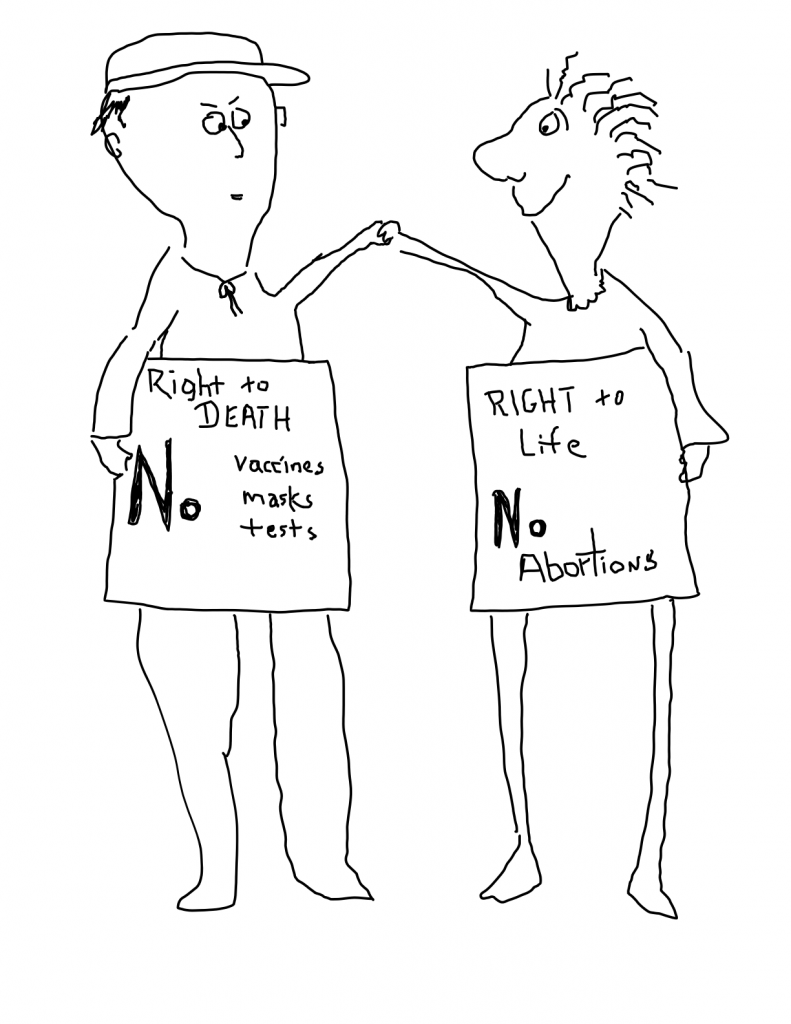
The holiday season, 2021, will go down in history as  stressful and disappointing for millions of people on the planet Earth. Actually “disastrous” is not an exaggeration for some.  Only weeks ago, it seemed that the Delta variant was showing signs of waning, and then out of South Africa comes Omicron. The Howell/Ellis clan were among millions of Americans whose lives were touched by this hideous virus. Here is our story:

To say that I had been looking forward to Christmas 2021 is an understatement. It was two years in the making. In 2020 I had reserved a 51-foot sloop in the Sunsail charter fleet in the British Virgin Islands for a week-long cruise for Embry, me, our two children and their spouses and our four grandchildren —10 of us in all. In the first year of Covid, when vaccinations were not yet available, we were forced to postpone for a year, to Christmas week, 2021. In early December of this year, we were all fully vaccinated, boosted and set for what was billed to be “The Last Hurrah BVI Cruise.”

My sailing days are nearing their end. I will turn 80 in three months, and this fall sold “Second Wind,” the last of the six sailboats Embry and I have owned beginning in 1968. This weeklong cruise starting on Christmas Day was not just another BVI cruise—and there have been many—but the end of an era and celebration of a lifetime of serious sailing and cruising. What could be better than to have all the family together in what many describe as the most ideal sailing waters on the entire planet? The BVIs are legendary for consistent trade winds of 12-18 knots, azure waters, and Carolina blue skies with welcoming, protected anchorages. And the grandchildren, now all teenagers or close to it, are now old enough to enjoy the experience of sailing – a pastime which has meant so much to me, starting when I was a teenager myself.

A week ago, following months of preparations, we were all set. I had planned out the cruising itinerary, reserved a kayak and a paddleboard to go with the boat, and Embry had purchased over $1,200 of food to be delivered to the boat and sent out a list showing who was responsible for cooking which meal. I had purchased all the ingredients for the legendary, tropical rum beverages of the BVIs—”Pain Killers” and “Dark-and-Stormies”.  Though it was becoming apparent that the new variant could be a problem, at the beginning of the week we were all feeling well and eager to go.

Like many countries, the BVI has established Covid testing protocols for visitors that are not entirely straightforward. To be allowed to enter, you have to have a Covid test showing negative results within five days of entry and show the results to the airline before you can board. Then once you arrive there you have to take another test; and if that is also negative, you are home free and allowed to enjoy nature’s sailing paradise. If the second test is positive, however, you have got a problem. You are not allowed to enter without a 14-day quarantine. Also, at the end of your wonderful vacation, to get back into the U.S. you have to have to show another test with negative results within 24-hours of reentering the U.S. This posed a bit of a challenge, but I thought I had it figured  out and made reservations for testing at the local hospital for  tests on our day of departure. Anyone testing positive would not be leaving the BVis for two more weeks, the details of which were not exactly clear.  I agree that thinking about what could happen was a bit unnerving, but, hey, early in the week we were all well, eager and chomping at the bit.

The warning shot across the bow happened on Monday, December 20, five days from the start of the charter. Andrew called us that evening with a worried tone. Andrew’s wife, Karen, had tested positive for Covid. What to do? Call the whole thing off? Go without Karen? In her typical, calm way, Embry suggested Karen should get another test. False positives were happening all over the place. That was the plan as we let the Ellises, our daughter Jessica’s family, know. We all grimly buckled down for the next two days awaiting the results. This event triggered an existential moment for me. I suddenly felt my stomach churning, triggering the fears that I had been struggling to suppress. For the last week or so when the headlines were all about Omicron, I had a premonition that we would not be able to pull this off.

Nail biting time.

Two days later on Wednesday, December 22, Andrew called back and joyfully announced the second test had come back, and it was negative. Trip on again! I could almost feel a collective sigh of relief from the entire family.

At the same time, tempering my enthusiasm was the false positive of Karen’s first test.   That raised some what-if questions. What if someone else’s test came back positive or false positive? The Ellis family had not gotten their tests yet. Neither had Embry or I. What if trying to get into the BVIs the negative test in the U.S. was followed by a positive test at the airport in the BVIs? What if someone tested positive on the BVI exit tests before coming back to the U.S.?

Then I thought about the last few days when I had had the sniffles, a sure sign of “mild Covid” for someone with two vaccines and a booster. I was convinced that I would be the one with the positive test. On Thursday, December 23, Embry and I got our rapid PCR tests at CVS; and with fear and trembling, I waited in agony for the email to come in posting the results. I held my breath and clicked the email: “Test Negative.” Eureka! Embry got the same results. We were going to go after all!  All we needed now were the results from the Ellis family, who lived a pretty secluded life in Portland, Maine, and took extraordinary precautions. Jasper, our oldest grandchild at 16, was rumored to double mask in his sleep.

Jessica called us around noon on the 23rd.  Jasper had gotten his booster shot that day and was feeling terrible, but not to worry. It was probably just a reaction to the shot. She would let us know about his test results later in the day. Time was running short, however.  On Christmas Eve morning,  they were to drive from Portland, Maine, to Maplewood, New Jersey, where they would spend Christmas Eve night with Andrew’s family, get rapid tests for the rest of their family, get up at 3:00 AM to head to Newark Airport where both families would board a 6:00 AM flight to San Juan, and then would  take a puddle jumper to the BVIs. It seemed to me to be cutting it a little close, but that was not unusual for the Ellis family. Uncharacteristically, I remained optimistic and assumed that everything would fall into place.

Until the second call came that evening: Jasper had tested positive for Covid.

What to do? The Ellis family was now out.  Jasper was sick and all others in their family exposed—probably to the highly infectious Omicron variant. Should we cancel the whole trip? After reviewing the pros and cons—actually mainly cons:  getting a positive test at the BVI airport, coming down with Covid on the boat, not being able to get out of the BVIs after the cruise, and mainly just not being the same without the whole family—the decision was starting to become obvious. All of the signs were bad, but to cancel what had been billed as the “Last Hurrah BVI Cruise” and probably my last shot at sailing the blue waters and fair winds of this magical place? Not an easy call. We agreed to think about it and talk early Christmas Eve morning.

There was one other complicating factor. We had gone to great lengths to get someone to cat sit for our aging cat, Queen. The person who finally volunteered was a cat lover and planned to bring along her mother and sister, who were visiting from out of town for the holidays and had  no other place to stay. It was one of those rare win/win situations, which made it very difficult for us to say sorry, the situation has changed, you are not needed, and now are on your own.  This was a non-starter. Starting Christmas Day our apartment would be occupied for five days by strangers. We would be homeless unless we could come up with an alternative.

Andrew called around eight Christmas Eve morning. He had a new idea. Forget the BVIs. Too much risk and not feasible. Without his sister’s family it would not be the same anyway. But since all our flights went through San Juan, why not just spend the week in Puerto Rico? He had done some research and found a terrific deal, renting a three-bedroom apartment overlooking a marina and only a five minute walk to a gorgeous beach.

Sounded like a great plan. We would miss Jessica’s family, but it would salvage a pretty woeful situation. Spending nights on the street for seven days was not all that appealing though I am sure we could have figured something out. I immediately perked up. “Never let the perfect be the enemy of  the good,” I told myself as I envisioned sitting on a secluded beach sipping a Pain Killer and feeling the warm breezes, maybe even renting a sailboat for a day from the marina. I told him to book it and breathed a sigh of relief.

I returned home from running some errands around four when Embry asked me if I had heard the latest news. The Puerto Rico trip was off. Andrew could not get the flights rebooked, and the apartment rental turned out to be double-booked.

 Back to square one.

Now I must say that the Lord works in mysterious ways. As a last ditch alternative to becoming homeless on the cold, dark streets of Washington, we decided to drive to New Jersey to spend Christmas week with Andrew’s family in Maplewood. This change of plans would allow us to take Embry’s older brother, Mike, up to Princeton where he would spend Christmas with his daughter, son-in-law, and his two teenage granddaughters. Mike is 85, a poet and artist, now living in a HUD seniors’ building in Washington and not able to travel easily on his own. This reunion had been planned but cancelled a few days earlier because of Covid risks associated with Mike’s riding the train. His daughter, Eva, was delighted when Embry asked her on Christmas morning if the new plan would work. Eva—whom we are very close to, along with her brother, Alex –had suggested that maybe we could stay for a “bite of lunch” before going to Maplewood. When I told her that we could only stop for a few minutes because we were expected for a full Christmas dinner with Andrew’s family around five, she held her ground. “No worries,” she said, “I just called them and they are coming too.”

The “bite of lunch” turned out to be a full Christmas feast, all delicious, vegetarian and vegan dishes, which began around three and lasted a couple of hours, followed by an evening walk through the village of Princeton and the university campus. The big question was how in the world did she pull this off. How did she prepare a meal intended for her family of four, which turned out be a delicious, gourmet feast for 11 people with ample leftovers? Maybe she went out and bought a lot of ingredients the moment she heard we were bringing Mike, but the grocery stores were all closed; and there was never any offer ahead of time for a full-fledged Christmas feast or any expectation on our part that we would have any more than a short visit and maybe a cup of tea. I found myself saying, “loaves and fishes, loaves and fishes.”

The Lord does indeed work in mysterious ways. I remember reading somewhere that “A coincidence is God’s way of remaining anonymous.”

And what about the other what-ifs? What if our cruise had started on December 23 instead of on the 25th? Jasper’s test would probably have come out negative the day before, on December 22, but the next day, first day on the cruise, he would have become very sick and would have exposed everyone. Had we had started a day or two earlier, we could have had everyone on the boat Covid-infected and no idea  how we would quarantine or when or how we would ever make it back home. We had dodged a bullet.

And as it turned out, our granddaughter, Josie, did come down with Covid on December 26 and her father, Peter, experienced the usual Covid symptoms—high fever, body aches, fatigue–on the 28th. Everyone thankfully is recovering, but still. Can you imagine what it would have been like on a sailboat in the BVIs with the entire crew sick? Karen also reported that the Jet Blue flight to San Juan that they were supposed to take appeared to be one of the ones that had been cancelled. I recall someone at one point saying, “Thank you, Jasper.”

The four days we spent in Maplewood with Andrew’s family were not the same as we would have had in the BVIs, but we still enjoyed our Pain Killers and Dark-and-Stormies. We drove to see Christmas lights in Newark, enjoyed sitting around the fire in their living room, told stories, played games, ate delicious food, and took walks—more or less a typical Howell Christmas, though sadly without the Ellises. We even made it to New York City to see the famous Christmas lights at the Bronx Zoo.

Our Covid Christmas story, it turns out, had a happy ending, but what about all the other people suffering through the Covid crisis, all the holiday get-togethers with family and close friends that did not happen , the family reunions that were postponed and, even worse, the Covid outbreaks that are already happening with surely many more on the horizon?  Life on this planet is indeed mysterious. Times of sorrow and despair mixed with times of happiness and gratitude.

Like our Covid Christmas story.


Visit me on Substack!
Subscribe to my Substack!